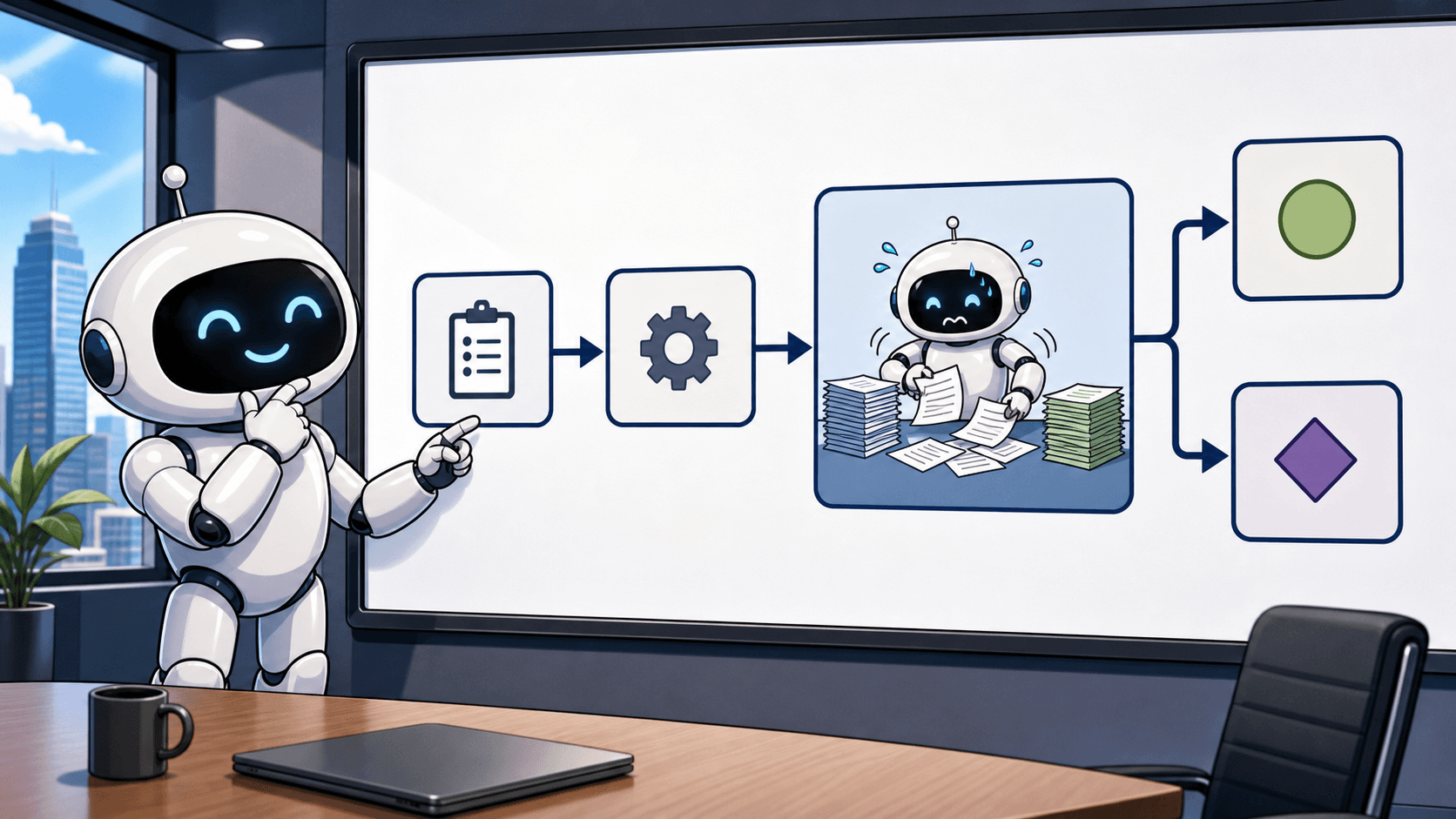
Our job as consultants in SAP Retail has always been to break down the customer’s requirements to customizing and custom code. In other terms, turn the ambiguous into non-ambiguous, testable software that will be general enough to address many, but not all, real-life situations.
The specialty of retail in the SAP context is that ERP processes are often close to the competitive position of the retailer.
The general aim is simple: sell more expensive than you buy, and make sure your customers get what they want, when and where they want it.
The seeming simplicity of the business model often leads to fierce competition, making adaptation speed key to survival. Size and market power are also important, driving down purchasing costs and improving the competitive position. To grow, speed is king, again.
Mostly, single items are sold to individual customers that are not even known to the retailer as a person. Still, these buyers enjoy a diverse set of rights, legal or cultural, to return goods, get their money back, complain about service quality and share their experience publicly. With social media, each consumer wields power over the retailer.
The retailer is therefore often in a difficult position, wedged between demanding consumers and powerful manufacturers.
From the technical standpoint, the specialty of retail in the SAP context derives from this competitive position, the large amount of vendors, buyers, articles and stock movements, and the need to react quickly without losing process control.
For large retail chains running SAP, large efforts have been made to automate processes.
Automation means disambiguation. Deterministic results. If-then-else.
SAP delivers an impressive range of software that can run fully automatically. At many retailers, a standard cycle of “article gets sold at the store, reordered from the vendor, shipped to store” does not get touched or seen by a human, except maybe when moving the physical goods in the warehouse or in the store. Everything else runs automatically.
This is why AI in retail processes has to be considered carefully.
Retail is not a greenfield environment where AI suddenly automates work that was previously untouched by technology. Retail has already been automated for decades. The question is therefore not simply: where can AI automate?
The better question is: where does ambiguity remain?
Some ambiguity remains because the cost of disambiguating it was too high. Some ambiguity remains because the possible situations change too often. Some ambiguity remains because no one in the organization is able or wants to define a rigid rule for it.
If a process is already fully automated, AI may help monitor it, explain it, test it, improve it or deal with its failures, as we have discussed in the corresponding chapters. It might also help in turning a manual process into an automatic process, as discussed in the chapters on tactical IT work and delivery.
If a process is manual, AI may help the human understand the context, compare options and prepare a decision.
This should not be confused with the idea that every human decision in retail should simply become an AI decision.
Retail processes often have high volume. A wrong price, a wrong listing, a wrong replenishment proposal, a wrong vendor condition or a wrong article master data decision may look small in one case, but become significant when multiplied by many articles, stores or customers.
AI may be able to analyze large amounts of data and documentation quickly. It may be able to identify deviations, suggest explanations and formulate implementation ideas.
Understanding whether a process is part of the retailer’s competitive advantage, whether it can be standardized, whether it should be customized, and whether it should remain manual is not a purely technical question.
As in the other layers we have discussed, AI is most useful when it helps humans understand faster and decide better.
Retail is therefore not a simple playground for AI automation. Much has already been automated. The interesting question is where ambiguity remains: in exceptions, edge cases, manual decisions, unclear responsibilities and situations where deterministic rules have either become too expensive or too rigid.
This leads to the next question: in which circumstances should AI merely help humans deal with these exceptions, or should it decide them? We will continue on this in the next chapter.
What acceletail offers:
We help retailers make the right decision about where to automate, where to leave activities manual, where to augment users with AI, and where to automate with AI.
What acceletail offers
If you want to discuss AI in SAP Retail, maintenance, projects or business processes, we are happy to start with a first conversation.
Get in touch