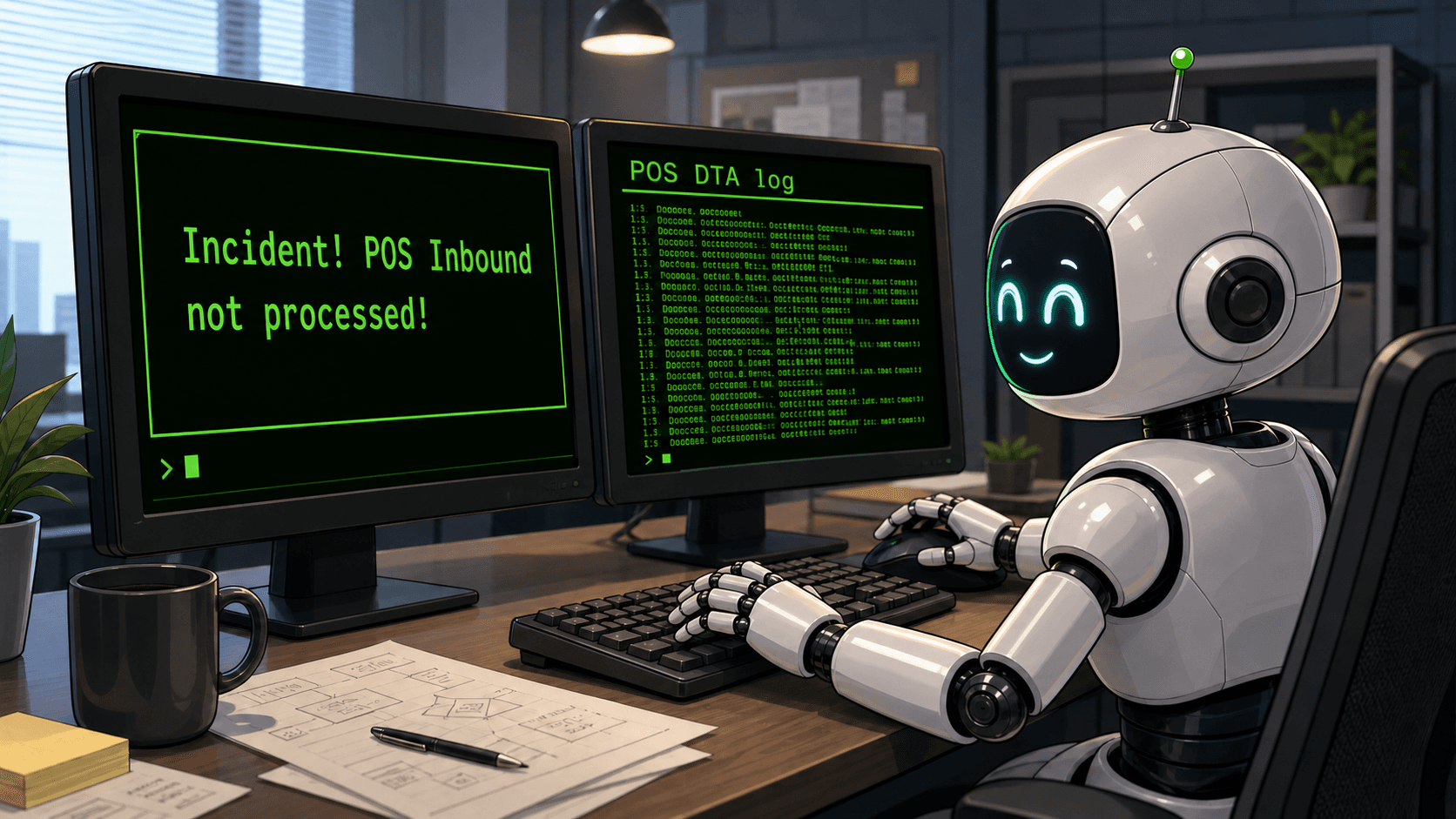
Incident management of SAP systems mostly deals with the behavior of systems which is, in the perception of the user or the monitoring team, not according to their intended functioning.
Sometimes this perception is caused by a technical error. Sometimes it is caused by wrong or unexpected master data. Sometimes by custom code. Sometimes by timing, authorization, configuration, misunderstood process logic, missing communication, or a real bug.
Business users usually report symptoms, not root causes.
“The price is wrong.”
“The article is not available.”
“The order proposal makes no sense.”
“The report is different from yesterday.”
“The goods receipt does not work.”
“The promotion is not applied.”
These statements are often correct from the user’s point of view. At the same time, they are ambiguous. The actual cause may be in master data, transaction data, configuration, interfaces, custom developments, authorizations, batch jobs, changed business rules, or simply in the user’s expectation.
In an ideal world, monitoring and maintenance identify issues even before they become incidents. In the real world, incidents reported by users remain a central part of SAP support.
Some incidents turn out to be small, non-repetitive deviations and are resolved as incidents. Others point to larger implications. In this case, they may have to be transferred to problem or change request processes to be addressed properly.
How can AI help us with this?
We at acceletail believe that incident management is one of the strongest practical use cases for AI in SAP support.
An incident is, in many cases, an exception to the rule described in human language. It combines ambiguity of language with ambiguity of system behavior.
AI can summarize the user’s issue. It can identify missing information and suggest clarifying questions. It can compare the incident with similar past incidents. It can inspect logs, documentation, custom code and known process behavior. It can check relevant SAP data where permitted. It can formulate hypotheses and point the consultant toward possible causes.
When a similar incident has happened before, with some clever system engineering it is possible for the AI to analyze whether the incident is really similar or just seemingly so.
Two incidents may look the same to the business user and have completely different root causes. Two technical errors may look different and still be caused by the same master data issue. AI can help compare the wording, the affected objects, the timing, the system messages, the custom code involved and the resolution history.
AI is also useful at spotting master data deviations that are unexpected and may have led to the system failure, given appropriate data access.
For example, an article may not be listed to a site. A condition record may be missing or unexpectedly valid. A vendor change may have influenced replenishment. A custom enhancement may behave differently for one article category. A background job may have finished correctly, but processed a different selection than expected.
In many of these cases, the difficult part is not the final fix. The difficult part is understanding where to look.
A challenge in this domain is, as so often, to provide the AI with the right context for the incident at hand.
The right context will consist of user and IT documentation of the process involved, SAP system access to check transactional and master data online, access to custom coding influencing the behavior, ticket history, monitoring data, and knowledge of the customer’s process.
The other challenge is not to leave the AI system to its own devices.
Qualified consulting skills are needed to check and challenge the AI’s conclusions, approve actions, and decide how to respond to the user. An AI-generated hypothesis can be useful. An AI-generated answer that is wrong, misleading or too confident can create additional damage.
As important constraints, all customer data and coding have to remain confidential, and all GDPR rules have to be applied.
This is why we see the strongest SAP AI use case in helping experts understand incidents faster, with better context and better evidence, rather than letting AI freely change productive systems.
To this end, we have developed accelet.ai as our support and monitoring platform. MCP servers, including ABAP documentation and ADT servers such as the excellent work by Marian Zeis, are invaluable resources to connect to SAP systems and custom code. Our own MCP servers supply additional capabilities.
We do not expect AI to replace SAP support consultants. We expect it to give them a better workbench: a way to combine the user’s description, past incidents, documentation, logs, system data and custom code into a structured analysis that can be reviewed, challenged and turned into an approved answer or action.
What acceletail offers:
With accelet.ai, we support SAP incident management by combining ticket context, documentation, SAP system access, custom-code analysis, past resolutions and expert review. The aim is faster root-cause analysis, better user communication, stronger documentation and qualified human control over every action.
What acceletail offers
If you want to discuss AI in SAP Retail, maintenance, projects or business processes, we are happy to start with a first conversation.
Get in touch